Schedule an Inspection to Get Started!
Talk to Our Experts Today to Find Out What We Can Do for YouLeading TPO Roofing Solutions for Commercial Buildings
TPO Roofing Systems: The Energy-Efficient Choice for Commercial Roofs
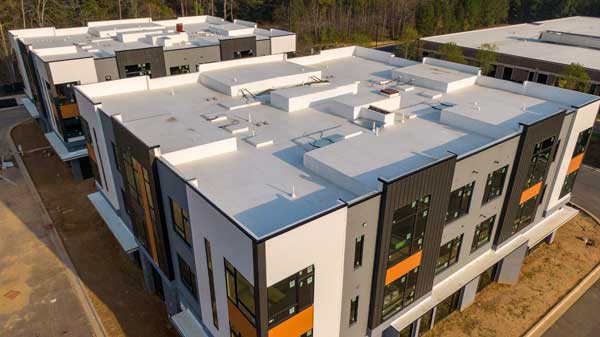
TPO (thermoplastic polyolefin) is a single-ply roofing membrane that has become the dominant choice for commercial flat and low-slope roofs across the United States. It consists of a single layer of synthetics and reinforcing scrim that is manufactured in rolls, typically 10 to 12 feet wide, and installed on the roof surface using one of several attachment methods. What makes TPO stand out from other commercial roofing systems is its heat-welded seams. Rather than relying on adhesive tape or liquid sealants to join sheets together, TPO seams are fused using hot-air welding at temperatures between 900 and 1,100 degrees Fahrenheit. The result is a seam that is actually stronger than the membrane itself, creating a monolithic waterproof surface across your entire roof.
The standard white TPO surface reflects over 80% of solar radiation, which translates directly into lower cooling costs for buildings in Austin, San Antonio, and the rest of Central Texas where summer temperatures regularly exceed 100 degrees. This reflectivity also qualifies many TPO roofs for Energy Star and LEED credits, making it an attractive option for building owners pursuing green building certifications. TPO roofing is energy-efficient, heat-resistant, and proven to perform exceptionally well on flat and low-slope roofs throughout Central Texas.
Why TPO Roofs Dominate Commercial Roofing in Texas
In a state where air conditioning accounts for a massive portion of building operating costs, TPO’s energy efficiency is not just a selling point; it is a financial imperative. The white reflective surface keeps roof surface temperatures dramatically cooler than dark-colored membranes like standard black EPDM, reducing the heat load your HVAC system must overcome. Beyond energy savings, TPO offers excellent resistance to chemical exposure, ozone, and ultraviolet radiation. It stands up well to the intense UV bombardment that Texas roofs endure year-round. Heat-welded seams eliminate the adhesive degradation that plagues EPDM seams over time, and TPO is highly resistant to punctures from rooftop foot traffic and falling debris during storms.
TPO roofing reflects over 80% of solar radiation, significantly lowering cooling costs in Central Texas 100F+ summers. Heat-welded seams are stronger than the membrane itself, unlike adhesive-based EPDM seams. TPO roofing is cost-effective compared to other single-ply systems with comparable performance, offers excellent chemical and puncture resistance for buildings with rooftop equipment and foot traffic, and is Energy Star and LEED eligible. When properly installed and maintained in Texas conditions, TPO membrane roofing can have a 20-30 year lifespan.
TPO Membrane Thickness, Installation, and Process
TPO membranes are available in three standard thicknesses, each suited to different applications and budget considerations. All options include polyester or fiberglass reinforcing scrim for dimensional stability and tear resistance. The 45 mil option works for budget projects and temporary structures; 60 mil is the standard commercial and recommended thickness; and 80 mil is used for high-traffic roofs that require premium protection and maximum lifespan. TPO roofing systems come with a 20-30 year NDL manufacturer warranty when installed according to proper specifications.
Installation methods for TPO roof installations include mechanically attached systems (fastened to the deck through the insulation) and fully adhered systems (bonded to the insulation with adhesive). Mechanically attached systems are faster and less expensive to install, while fully adhered systems offer better wind uplift performance and a cleaner appearance, making them preferred for high-wind areas and buildings where aesthetics matter. The TPO installation process follows manufacturer specifications precisely: removing existing membranes, repairing deck damage, installing insulation for thermal performance, positioning and fastening TPO sheets, hot-air welding all seams and flashing, and finally, installing edge metal and all penetration flashings.
TPO Roofing vs. EPDM and Modified Bitumen
Choosing between commercial roofing systems depends on your building type, budget, energy goals, and maintenance preferences. TPO roofing offers the strongest combination of energy efficiency, seam durability, and value for most Central Texas commercial buildings where cooling costs are a primary concern. However, EPDM rubber roofing remains an excellent choice for budget-conscious projects, and modified bitumen is ideal for buildings with heavy rooftop traffic.
TPO roof installations are especially beneficial for offices, retail spaces, warehouses, medical facilities, and any flat or low-slope commercial building where energy efficiency matters. Buildings with high cooling loads, such as data centers, server rooms, and south-facing retail spaces, benefit the most from TPO’s solar reflectance. The material is engineered to handle unique Texas challenges like intense UV radiation, severe hailstorms, and occasional flash flooding, especially when specified and installed properly.
TPO Membrane Roofing: Performance, Longevity, and Frequently Asked Questions
A properly installed TPO roof typically lasts 20-30 years in Central Texas conditions. Longevity depends on membrane thickness, quality of installation, and the regularity of maintenance. Thicker membranes and fully adhered installations tend to last longer, and regular inspections and prompt repairs can maximize the lifespan of TPO membrane roofing. Small to mid-size commercial projects generally range from $5 to $10 per square foot installed, depending on specifications and building requirements.
TPO can often be installed over an existing roof if the underlying deck and insulation are in good condition and if local building codes permit. Seams are hot-air welded, creating a watertight bond stronger than the membrane itself and eliminating many issues associated with adhesive-based seams used in other systems. TPO’s superior puncture and UV resistance, combined with strong manufacturer warranties, provide business owners with confidence and peace of mind.
Request a TPO Roofing Consultation Today
If you are considering TPO roofing for your commercial building, now is the perfect time to schedule a free inspection and receive a professional assessment of your roofing needs. Our team is committed to helping you understand whether TPO membrane roofing, EPDM, or modified bitumen is best for your facility and budget. Get honest recommendations and transparent quotes tailored to your building requirements. Contact Stanley Built Roofing at (832) 536-8938 or email info@stanleybuilt.com for more information. You can also fill out our online form to schedule your free inspection.